
Understanding Sustainability Through Everyday Actions
On campus, conversations about online behaviour are shaping how students think about responsibility and well-being. Along the coast, small groups are planting mangroves to help protect fragile ecosystems.
While these moments may seem different, together they reflect a broader understanding of sustainability taking shape across QI Group, extending beyond environmental action to include education, community, and everyday decision-making.
Addressing Social Challenges on Campus
At Quest International University (QIU), this approach is evident in recent initiatives that address social issues.
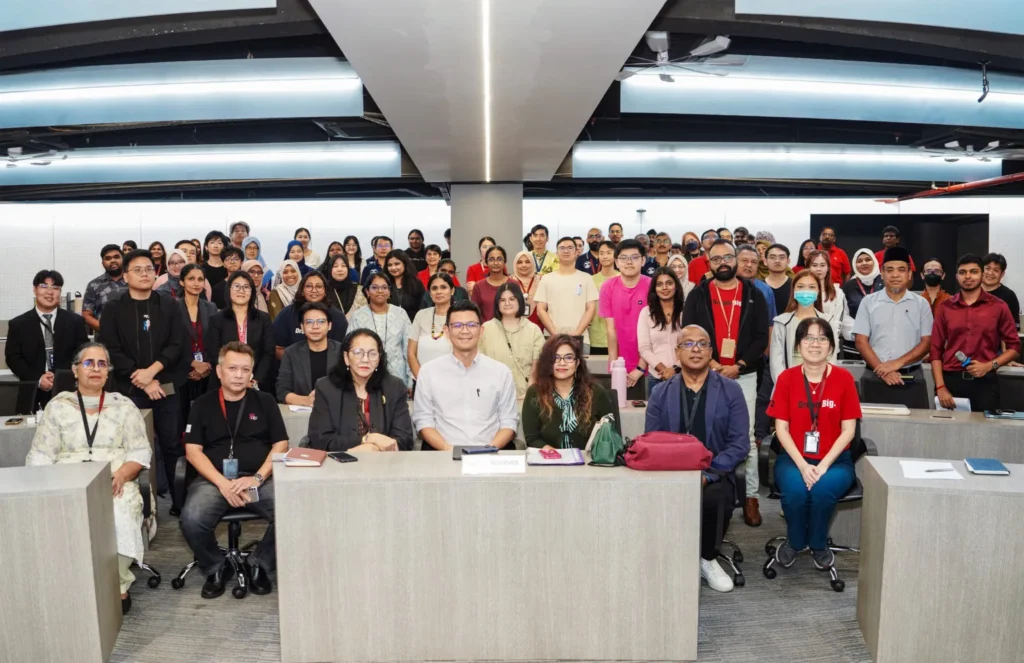
Earlier this year, QIU’s SDG Education cluster organised a campus-wide panel on cyberbullying. The session brought together students and faculty to examine the impact of digital behaviour on mental health, safety and inclusion, highlighting the role of education in addressing social challenges that increasingly affect young people.
More on the discussion can be found in QIU’s article on cyberbullying.
Protecting Ecosystems Through Collective Action
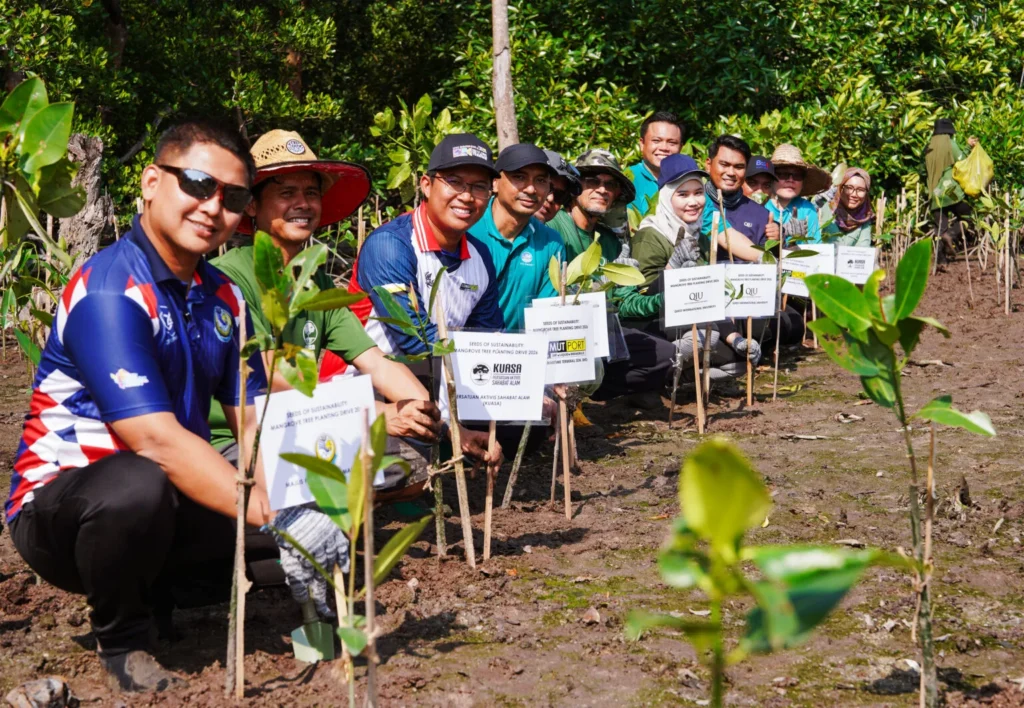
In a separate initiative, QIU led a mangrove conservation effort in Manjung, involving students, industry representatives, local authorities and community members.
Through activities such as mangrove planting and environmental awareness, the initiative focussed on protecting coastal ecosystems while encouraging shared responsibility.
More on QIU’s mangrove conservation here.
Connecting Individual Efforts to a Broader Direction
Taken together, these efforts point to a wider shift, where sustainability is not defined by a single activity, but by different forms of engagement across social and environmental issues.
Guided by its evolving ESG direction, the Group is progressively strengthening how sustainability is considered in decision-making, with reference to frameworks such as the United Nations Global Compact and the UN Sustainable Development Goals.
Putting Structure Behind Sustainable Decisions
This includes implementing clearer processes to ensure sustainability considerations are addressed earlier, particularly in procurement, events, and product-related decisions.
Frameworks such as Project SEED (Sustainable Events & Ethical Design) support this by introducing ESG screening prior to key commitments, enabling more informed and responsible choices over time.
There is also a growing focus on working more closely with suppliers, with expectations around environmental, social, and ethical practices becoming more clearly defined over time.
These steps reflect a broader understanding that sustainability extends beyond direct operations and depends on collaboration across the value chain.
Extending Efforts Beyond the Workplace
Beyond campus and internal systems, similar thinking is reflected in community-based initiatives such as QI Group’s work in Koh Samui.
The programme focusses on reducing coastal litter and supporting marine ecosystem health, while involving employees and local communities in conservation efforts. Connecting environmental protection with on-the-ground participation offers a practical example of sustainability in action.
Aligned with the Group’s broader ESG direction, the initiative also contributes to ongoing efforts to better understand and respond to nature-related impacts.
Building Forward, Step by Step
These efforts are still evolving. Rather than focussing on individual milestones, the emphasis is on building consistency, strengthening processes and learning along the way.
From classrooms to coastlines, sustainability is taking shape through small, deliberate actions that continue to build progressively over time.