

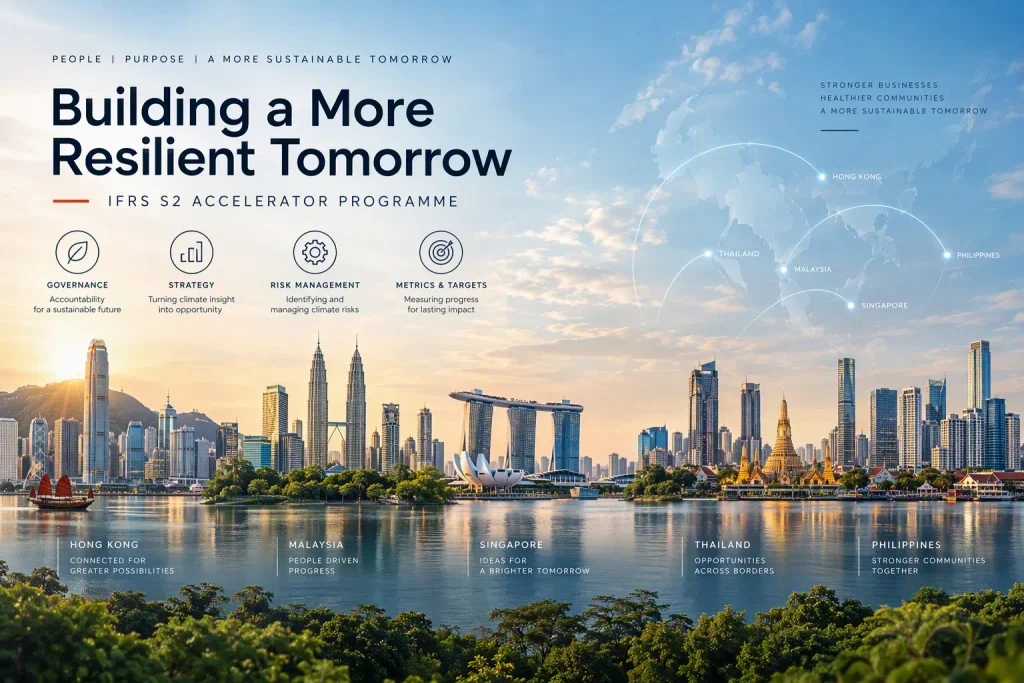
QI Group has strengthened its understanding of climate-related risks and sustainability disclosures through participation in the 2026 IFRS S2 Accelerator Programme, organised by the UN Global Compact Network Malaysia, Brunei & Cambodia (UNGCMBC).
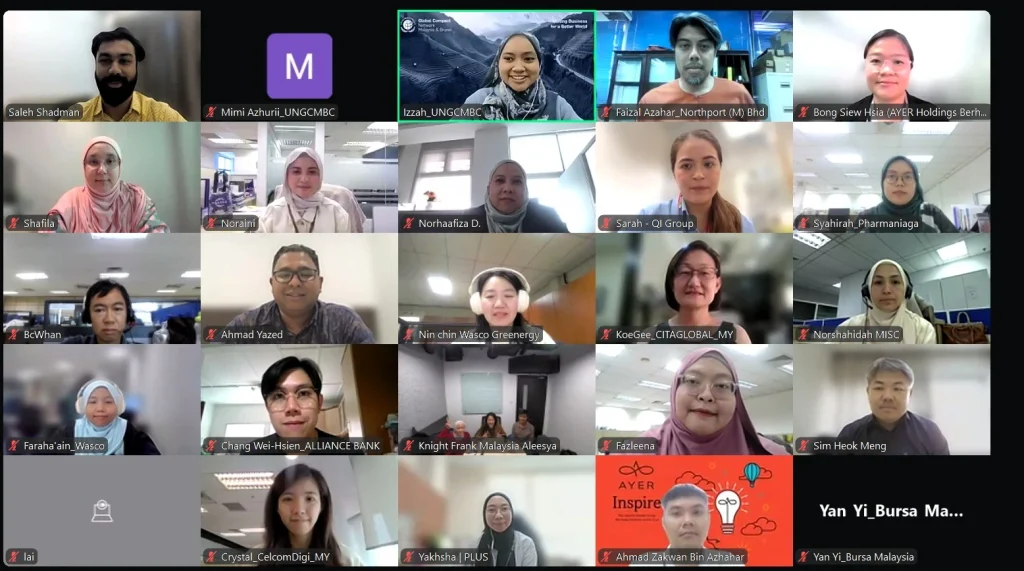
As part of its proactive approach to building sustainability capability, QI Group’s Sustainability Department participated in three online workshops and an in-person coaching session. The programme provided practical insights into climate-related risks, disclosure requirements and the governance processes that support credible climate reporting.
Understanding IFRS S2 and Its Growing Relevance
Developed by the International Sustainability Standards Board (ISSB), IFRS S2 provides a framework for companies to disclose climate-related risks and opportunities that could affect their business prospects.
Together with IFRS S1, which addresses broader sustainability-related financial disclosures, the standards aim to improve transparency and comparability in corporate sustainability reporting. In Malaysia, their phased adoption under the National Sustainability Reporting Framework (NSRF) reflects the growing importance of reliable sustainability information in business and investment decisions.
Connecting Climate Risks with Business Decisions
The workshops explored physical climate risks, including flooding, drought and extreme heat, alongside transition risks arising from changes in policies, technologies, markets and stakeholder expectations.
Participants examined how these factors could influence operating costs, capital expenditure, revenue, insurance and long-term business resilience.
The sessions also covered the four core areas of IFRS S2 disclosure: governance, strategy, risk management, and metrics and targets, highlighting how climate considerations connect with business oversight and decision-making.
Practical Tools for Reporting Readiness
Participants were introduced to the Sustainability-Related Risks and Opportunities (SRO) Navigator and IFRS S2 Toolbox, practical resources designed to support the identification of climate-related risks and opportunities, understanding of disclosure requirements and the development of credible reporting practices.
The programme’s combination of workshops and in-person coaching provided a practical introduction to these requirements and their relevance to business operations.
Strengthening QI Group’s Sustainability Capability
“This programme strengthens our understanding of climate-related risks and opportunities and the foundations needed for credible disclosure. It supports our ongoing work to build internal capability and inform business decisions,” said Sarah Noble, Head of Group Corporate Sustainability at QI Group.
The insights gained provide QI Group with useful reference points for strengthening ESG data, climate risk assessment and sustainability governance as the Group continues to advance its sustainability agenda.